
Silver is the New Gold
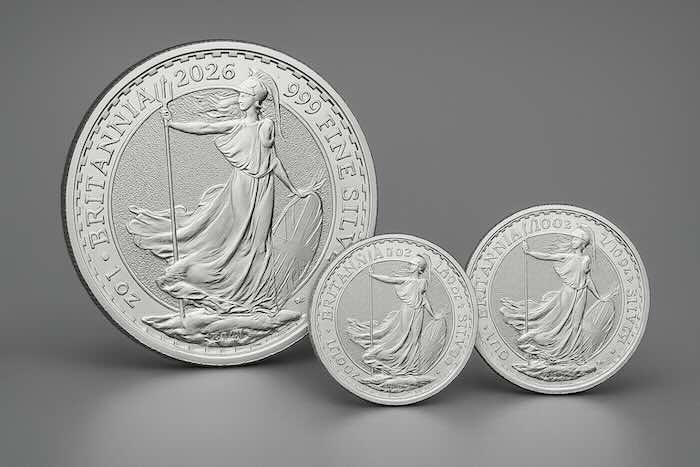
Silver has always had a special place in the world of precious metals. For centuries, people have valued it as money, jewelry, a store of wealth, and an important part of everyday life. Gold has traditionally received more attention, especially when people talk about protecting wealth. But silver is no longer just the cheaper alternative to gold.
Today, silver has another important role. It is widely used in electronics, solar technology, automobiles, electrical equipment, medical applications and several other industries. This combination of precious-metal demand and industrial demand makes silver very different from many other investments.
That is one reason the phrase “silver is the new gold” has become increasingly interesting to investors.
However, calling silver “the new gold” does not mean that silver will always outperform gold or that its price can only go up. Silver can be highly volatile, and its price can move sharply in both directions. The better way to understand the idea is to look at why silver is becoming more important, what is driving its demand, how its supply works, and what investors should know before putting money into it.
In this article, we will look at silver from a long-term perspective, including its industrial use, supply and demand, investment potential, risks, and its growing importance in India and around the world.
Why Is Silver Called the New Gold?
Gold and silver have shared a long history as precious metals. Both have been used as money and stores of value, and both continue to be important in jewellery and investment markets.
But there is one major difference between them.
Gold is mainly held as a financial and monetary asset. Central banks, investors and households buy gold for wealth preservation, diversification and protection during periods of uncertainty.
Silver has a more complicated story.
It is both a precious metal and an industrial metal.
A significant amount of silver is consumed in manufacturing and technology. Once silver is used in many products, some of it becomes difficult or uneconomical to recover. This gives silver a different demand profile from gold.
The latest data shows how important this industrial side has become. According to the Silver Institute’s 2026 market outlook, global silver industrial fabrication is expected to remain around 650 million ounces in 2026, even though it is forecast to decline from the previous year. At the same time, demand from areas such as artificial intelligence infrastructure, automotive applications and power-grid investment is expected to support industrial consumption.
So, when people say silver is the new gold, they are not simply talking about its price.
They are talking about its changing role in the modern economy.
Silver Has a Long History of Value
Silver is not a new investment idea.
Long before modern stock markets, digital currencies and online banking existed, silver was used as money in many parts of the world. Coins made from silver were widely accepted because the metal was durable, divisible and relatively easy to store and transport.
Gold was generally more valuable per unit of weight, while silver was more accessible for everyday transactions.
This historical connection is still important today because it explains why investors often compare the two metals.
Both have survived major changes in financial systems. Both have been used as stores of value. Both are traded globally.
But the modern silver market has developed in a direction that makes it much more than a monetary metal.
Silver now has a strong connection with technology and industrial growth.
Gold and Silver Are Not the Same Investment
It is tempting to compare silver and gold only by looking at their prices. That can give an incomplete picture.
Gold has a much stronger role as a financial asset. Central banks hold gold as part of their reserves, and investors often move toward gold during periods of financial or geopolitical uncertainty.
Silver does not have the same level of central-bank demand.
Instead, silver has a much larger industrial connection.
It is used because of its excellent electrical and thermal conductivity and its ability to perform reliably in many technical applications. Silver is found in electrical contacts, electronics, solar technology, automobiles and other industrial products.
This creates an interesting situation.
When the global economy grows and technology investment increases, industrial silver demand can benefit. But when economic activity slows, some industrial demand can weaken.
That is why silver can sometimes behave like a precious metal and at other times behave more like an industrial commodity.
📊 Silver vs Gold: Key Differences
| Feature | Silver | Gold |
|---|---|---|
| Main role | Precious metal + industrial metal | Precious metal + monetary asset |
| Price per unit | More affordable | Much more expensive |
| Industrial use | Very high | Comparatively limited |
| Solar technology | Widely used | Limited |
| Electric vehicles | Used in electrical/electronic components | Limited use |
| Electronics | Important because of high conductivity | Used in some specialized applications |
| Central bank demand | Very limited | Very important |
| Volatility | Generally higher | Generally lower |
| Storage | Requires more physical space | Easier to store by value |
| Accessibility | Easier for smaller investors | Higher entry cost |
| Investment role | Diversification + industrial growth exposure | Wealth preservation + diversification |
Silver and gold both have a place in a diversified investment strategy, but they serve different purposes. Silver has a stronger connection with industrial demand, while gold has a more established role as a monetary and wealth-preservation asset. Neither metal is automatically better for every investor.
The Gold-Silver Ratio: Why Investors Watch It
One of the most commonly discussed measurements in the precious-metals market is the gold-silver ratio.
The ratio simply tells us how many units of silver are needed to equal the price of one unit of gold.
For example, if gold is trading at a price that is 60 times the price of silver, the gold-silver ratio is 60.
Investors watch this ratio because it gives them another way to compare the relative prices of the two metals.
However, the ratio should not be treated as a guaranteed signal that silver must rise whenever the ratio becomes high.
Market conditions are more complicated than that.
Gold and silver have different supply structures, different demand drivers and different investor bases. The ratio can remain high or low for long periods.
So, rather than asking whether a particular ratio means silver is automatically cheap, investors should look at the bigger picture: demand, supply, industrial growth, investment flows, interest rates, inflation and overall market sentiment.
Silver’s Biggest Advantage: Industrial Demand
This is where the silver story becomes especially interesting.
Silver is not valuable only because investors want to own it.
Industries actually need it.
Silver has one of the highest electrical conductivities among metals, which makes it useful in electrical and electronic applications. It is used in switches, contacts, printed circuit boards, solar cells and many other components.
The modern economy is becoming more dependent on electricity and electronics.
Think about how many electrical devices are used every day.
Smartphones.
Computers.
Cars.
Home appliances.
Medical equipment.
Communication systems.
Solar panels.
Data centres.
Power infrastructure.
As the world becomes more digital and more electrified, demand for materials used in these systems becomes increasingly important.
Silver is one of those materials.
Silver in Solar Panels
Solar energy is one of the most important areas for silver demand.
Silver is used in photovoltaic cells because its electrical properties help collect and transport the electricity generated by the solar cell.
The solar industry has become a major consumer of silver over the past decade.
According to the Silver Institute, photovoltaic applications accounted for a much larger share of industrial silver demand in 2024 than they did a decade earlier. At the same time, technology is changing. Solar manufacturers are working to reduce the amount of silver used in individual cells because silver is expensive. This process is known as thrifting, while substitution refers to replacing some silver use with other materials.
This is an important point for anyone writing about silver.
It would be wrong to say that solar growth automatically means unlimited silver demand.
Solar installations can grow while the amount of silver used per solar cell falls.
That is exactly why the silver story needs to be viewed with both optimism and caution.
Silver and Electric Vehicles
The growth of electric vehicles is another reason silver is attracting attention.
Modern vehicles contain many electronic and electrical systems. Electric vehicles have even more dependence on electrical components, power electronics, charging systems and control systems.
Research commissioned by the Silver Institute and produced by Oxford Economics estimates that battery-electric vehicles use significantly more silver than traditional internal-combustion vehicles. The report estimates approximately 25–50 grams of silver per EV, depending on the vehicle and its technology.
This does not mean every electric vehicle contains exactly the same amount of silver.
Vehicle design, technology and manufacturing processes vary.
But the broader trend is important: as transportation becomes more electrified, the demand for conductive materials can increase.
That gives silver another connection to a long-term technological trend.
Silver, Electronics and the Digital Economy
Silver is also important in electronics.
Its electrical conductivity makes it useful in a wide range of applications, from electrical contacts to circuit boards and other components.
The digital economy is growing rapidly.
We use more connected devices than ever before. Businesses are building larger computing systems. Artificial intelligence is increasing demand for data-processing infrastructure.
Data centres require enormous amounts of electrical equipment, power systems, cooling infrastructure and electronic hardware.
The Silver Institute expects AI-related technologies, data centres and automotive applications to support silver consumption in coming years, even as some other industrial segments face pressure.
This does not mean AI alone will determine the future silver price.
Commodity prices are influenced by many factors.
But it shows why silver is connected to several major technology trends at the same time.
Is Silver Supply Keeping Up With Demand?
This is one of the most important questions in the silver market.
According to the Silver Institute’s 2026 outlook, the global silver market is expected to remain in deficit for a sixth consecutive year. The forecast calls for a deficit of about 67 million ounces in 2026. Total supply is expected to increase, but not enough to fully cover projected demand.
A market deficit means that estimated demand is greater than newly available supply during the period.
It does not automatically mean that silver will run out.
The difference can be covered by existing above-ground inventories, recycling and other market mechanisms.
Still, repeated deficits are something investors watch because they can place pressure on available physical supplies.
Why Can’t Silver Production Simply Increase Quickly?
One reason is that silver production is closely connected to mining for other metals.
A significant amount of silver is produced as a by-product of mines that primarily extract metals such as lead, zinc, copper or gold.
This creates a supply challenge.
If silver prices rise sharply, mining companies cannot always respond by simply opening a large number of new silver mines immediately.
New mines require exploration, investment, permits, construction, infrastructure and years of development.
The 2026 Silver Institute outlook expects global silver mine production to increase by about 1 percent to roughly 820 million ounces. Recycling is also expected to rise. Even with these increases, the market is forecast to remain in deficit.
This is one of the reasons silver supply deserves attention.
Recycling Can Help, But It Has Limits
Silver can be recycled.
When silver prices rise, more people and businesses may find it worthwhile to recover silver from jewellery, industrial waste, electronics and other sources.
The Silver Institute expects silver recycling to increase in 2026, with volumes forecast to exceed 200 million ounces for the first time since 2012.
But recycling cannot solve every supply problem.
Silver is often used in very small quantities in electronic products. Recovering those tiny amounts can be technically difficult or economically unattractive.
Some silver is also lost during manufacturing or remains inside products that are never recycled.
Therefore, higher recycling can improve supply, but it does not guarantee that the market will always balance itself quickly.
Why Silver Prices Can Be So Volatile
Silver has an exciting story, but it also comes with a major risk: volatility.
Silver prices can move much more sharply than many investors expect.
There are several reasons.
First, the silver market is smaller than the gold market.
Second, silver has both investment demand and industrial demand.
Third, investor sentiment can change quickly.
When investors become optimistic about precious metals, silver can attract strong buying interest. But when sentiment turns negative, silver can fall quickly as well.
This is why silver should not be treated as a guaranteed way to make money.
A strong long-term story does not remove short-term market risk.
Is Silver Really More Affordable Than Gold?
In terms of price per unit, silver is much more affordable than gold.
That makes it attractive to people who want exposure to precious metals but cannot or do not want to buy large amounts of gold.
For example, a beginner can buy a relatively small quantity of physical silver.
But affordability should not be confused with safety.
A lower price does not automatically mean a better investment.
An asset can be cheap per gram and still fall significantly in percentage terms.
The right question is not simply, “Which metal is cheaper?”
A better question is:
What role does this asset play in my overall financial plan?
Benefits of Investing in Silver
Silver can offer several potential benefits when used appropriately.
One benefit is diversification. Investors who already own equities, bonds, property or other assets may consider precious metals as one part of a broader portfolio.
Another potential benefit is its industrial demand.
Unlike an asset whose value depends almost entirely on investor interest, silver has real-world applications across several industries.
Silver can also be accessible to smaller investors because its unit price is much lower than gold.
And during periods of monetary or geopolitical uncertainty, precious metals can attract additional investor attention.
However, none of these points guarantees future returns.
The Risks of Investing in Silver
Every investment has risks, and silver is no exception.
The first risk is price volatility.
Silver can rise quickly, but it can also fall sharply.
The second risk is industrial demand.
Because silver is heavily used in industry, an economic slowdown can affect demand.
The third risk is technological substitution.
Manufacturers are actively looking for ways to reduce the amount of silver used in some applications, particularly solar technology. The latest industry outlook specifically highlights thrifting and substitution as factors affecting photovoltaic demand.
The fourth risk is storage and security when buying physical silver.
Investors need to think about where they will keep coins, bars or jewellery.
The fifth risk is liquidity and transaction costs.
The price you pay when buying physical silver may be higher than the price you receive when selling it.
Therefore, investors should understand all costs before making a purchase.
Physical Silver: Coins, Bars and Jewellery
One of the simplest ways to own silver is through physical metal.
Coins and bars are commonly considered investment forms because their value is more directly linked to the silver content.
Jewellery is different.
When you buy silver jewellery, you may pay for design, workmanship, making charges and other costs in addition to the metal itself.
That means jewellery is not necessarily the most efficient form of silver investment.
If the main goal is investment rather than wearing the product, investors should compare purity, premiums, taxes, storage and resale conditions carefully.
Silver ETFs and Other Financial Options
Investors who do not want to store physical silver can explore financial products linked to silver.
Silver exchange-traded funds can provide exposure to silver without requiring the investor to physically store bars or coins.
However, financial products have their own costs, structures and risks.
Before investing, check the product’s objective, expense ratio, tracking method, liquidity and regulatory details.
Never choose an investment product only because its name contains the word “silver.”
Understand what you are actually buying.
Silver Investment in India
Silver has a long cultural and financial connection with Indian households.
It is commonly used in jewellery, gifts, religious items, utensils and investment products.
India is also an important market for silver demand.
However, Indian investors need to consider local factors such as taxes, making charges, purity, dealer premiums and resale prices.
For physical silver, purity matters.
For financial products, the structure of the product matters.
There is no single “best” way to invest in silver for everyone.
Someone buying silver for long-term wealth diversification may have different needs from someone buying silver jewellery for personal use.
Should Beginners Invest in Silver?
Beginners should not start with the assumption that silver prices will definitely rise.
A better approach is to first understand the asset.
Ask yourself:
Why am I buying silver?
How long do I plan to hold it?
Can I handle large price movements?
Do I want physical metal or a financial product?
How much of my overall savings would be invested?
Do I have an emergency fund already?
These questions are more important than trying to predict the exact future silver price.
Silver Is Not a Guaranteed Replacement for Gold
The phrase “silver is the new gold” sounds powerful, but it should not be interpreted literally.
Silver does not replace gold.
Gold has unique characteristics and a very different role in the global financial system.
If you are also thinking about how gold fits into a wider investment portfolio, our guide on [gold and equity allocation in India] explains how investors can balance growth and stability.
Central banks hold gold. Silver does not play the same role.
Gold also has a much higher value concentration, making it easier to store large amounts of wealth in a relatively small physical quantity.
Silver has advantages of its own, particularly its industrial applications and lower price per unit.
So the better conclusion is not that silver will replace gold.
The better conclusion is that silver deserves to be taken seriously as a separate asset with its own investment case.
What Could Drive Silver in the Coming Years?
Several long-term themes could influence silver demand.
The first is electrification.
The world is using more electrical equipment, vehicles and infrastructure.
The second is renewable energy.
Solar installations continue to expand globally, although manufacturers are also trying to reduce silver use per cell.
The third is digital infrastructure.
AI, data centres and advanced computing require significant electrical infrastructure.
The fourth is automotive technology.
Modern vehicles are becoming more electronic, and electric vehicles require additional electrical components.
The fifth is investment demand.
If investors continue to see precious metals as a way to diversify portfolios or protect against uncertainty, investment demand could support silver.
These trends are important, but they are not guarantees.
Markets can change.
Technology can change.
Consumer behaviour can change.
And prices can change faster than the underlying fundamentals.
What the 2026 Silver Outlook Tells Us
The latest 2026 outlook provides a useful example of why silver needs a balanced analysis.
The Silver Institute expects the market to remain in deficit for a sixth consecutive year. Physical investment is forecast to increase by 20 percent to around 227 million ounces. At the same time, industrial fabrication is expected to decline because of weakness in photovoltaic silver demand and ongoing efforts to use less silver.
This is an important lesson.
A bullish silver story does not require every demand category to increase.
Some areas can decline while others grow.
In 2026, data centres, AI-related technologies, automotive demand and power-grid investment are expected to support some industrial applications, while photovoltaic demand faces pressure from thrifting and substitution.
That makes the silver market more complicated—and more interesting—than a simple “demand is rising, therefore prices must rise” argument.
Can Silver Become More Important Than Gold?
It depends on what we mean by “important.”
If we mean financial importance, gold will likely remain unique because of its role in central-bank reserves and global finance.
If we mean industrial importance, silver already has a very strong position.
Silver is used in technologies that support electrification, renewable energy, electronics and modern transportation.
That means silver can become increasingly important to the physical economy even without replacing gold as a monetary asset.
This is perhaps the strongest reason behind the phrase “silver is the new gold.”
It represents a changing role rather than a simple replacement.
Final Thoughts: Is Silver the New Gold?
Silver has come a long way from being viewed simply as a cheaper version of gold.
It has a long history as a precious metal, but today it also plays an important role in modern industry.
From solar panels and electric vehicles to electronics, power infrastructure and emerging technologies, silver is connected to many areas of the global economy.
At the same time, silver is not a risk-free investment.
Its price can be highly volatile. Industrial demand can weaken. Manufacturers can reduce silver usage. New technologies can change the demand outlook. Physical silver also comes with storage, purity, transaction and resale considerations.
That is why investors should avoid making decisions based only on headlines or predictions.
The strongest reason to pay attention to silver is not that it is guaranteed to become more valuable than gold.
It is that silver has two important identities.
It is a precious metal that investors value, and it is an industrial metal that modern technology needs.
That combination makes silver unique.
So, is silver really the new gold?
Perhaps the better answer is this:
Silver may not replace gold, but it is becoming too important to ignore.
For investors who understand its potential, its risks and its place within a diversified financial plan, silver can be an interesting asset to watch.
The future price is impossible to know with certainty. What we can study are the forces behind the market—supply, demand, technology, investment behaviour and global economic conditions.
And those forces make silver one of the most interesting metals to watch in 2026 and beyond.
Frequently Asked Questions About Silver
Is silver the new gold?
Silver is sometimes called the new gold because it combines the characteristics of a precious metal with growing industrial importance. However, silver does not replace gold. The two metals have different markets, uses and investment characteristics.
Is silver a good investment in 2026?
Silver may have a place in a diversified portfolio, but it is not suitable for everyone. Its market can be volatile, so investors should consider their financial goals, risk tolerance and investment horizon before buying.
Why is silver important for the future?
Silver is used in electronics, solar technology, automobiles, electrical equipment and other industrial applications. Growth in electrification, renewable energy, automotive technology and digital infrastructure could continue to support demand.
Is silver cheaper than gold?
Yes, silver has a much lower price per unit of weight than gold. However, a lower price does not automatically make an investment safer or more profitable.
Is silver better than gold?
Neither metal is universally better. Gold has a stronger monetary and central-bank role, while silver has a much stronger industrial connection. The right choice depends on the investor’s goals and risk tolerance.
What is the gold-silver ratio?
The gold-silver ratio shows how many units of silver are equal in value to one unit of gold. Investors sometimes use it to compare the relative prices of the two metals, but it should not be treated as a guaranteed trading signal.
Can silver prices fall?
Yes. Silver can experience significant price declines. Industrial demand, economic conditions, interest rates, investor sentiment, currency movements and changes in technology can all influence the price.
Is physical silver good for beginners?
Physical silver can be accessible to beginners, but buyers should understand purity, premiums, taxes, storage and resale conditions before purchasing. Silver jewellery should not automatically be treated as the same thing as investment-grade silver.
Will solar energy increase silver demand?
Solar technology is an important source of silver demand, but the relationship is not straightforward. Solar installations can grow while manufacturers reduce the amount of silver used per cell through thrifting and substitution.
Does an electric vehicle use silver?
Yes. Silver is used in various electrical and electronic applications in vehicles. Research cited by the Silver Institute estimates approximately 25–50 grams of silver can be used in a battery-electric vehicle, although actual usage varies by vehicle and technology.
Important Disclaimer
This article is for educational and informational purposes only. It is not financial, investment, tax or legal advice. Silver prices can rise or fall, and past performance does not guarantee future results. Before investing, consider your financial situation, goals and risk tolerance and, where appropriate, consult a qualified financial professional.
Sources
The market data and industry information used in this article are based primarily on research and publications from the Silver Institute, including its World Silver Survey 2026 and its research on silver’s role in technology, automotive and industrial applications.
Awesome information